Aerial view of deep blue ocean waves

The Blue Economy Career Map

Find your career protecting and building the sustainable ocean economy.

Explore the sectors, role directions, skills, and organizations of the sustainable ocean economy — and map your way in.

8

Sectors mapped

0

Job directions

0

Organizations

20

Job boards linked

Ocean pulse

The sea, once it casts its spell, holds one in its net of wonder forever.

— Jacques Cousteau

–

Wave height · North Sea

–

Sea surface temp · North Sea

–

Vessels underway · Baltic AIS

Visitor count: Ocean Innovators who have charted their course here

have charted their course here

Live open data — Open-Meteo Marine & Fintraffic Digitraffic AIS · free public feeds, refreshed every 10 minutes · quote changes daily

The Blue Economy at a glance

A living map of the sustainable ocean economy: every major sector, the role directions within it, the skills in demand, and the actors who hire. Expand a sector to explore where you could fit.

Turquoise ocean waves seen from above

Who is Who

The organizations behind the blue economy

Europe's most qualified aquaculture companies and research institutes — plus the wider actors of the ocean economy — organized by country. Find who hires, who researches, and who to connect with.

Explore the directory

Something unexpected

Career Compass

Not sure where you fit in the Blue Economy? Answer five quick questions and get your bearing — a sector match, live roles to explore, and boards worth following.

Takes about 60 seconds. No sign-up.

Salary & Role Explorer

Demystify pay in the Blue Economy

Filter roles by skill or impact area to see compensation trends across marine tech, offshore energy, conservation, aquaculture, and policy.

Filter by skill

Impact area

How to read this: ranges are illustrative benchmarks for the European market (annual gross, EUR, typical full-time roles). Regional variation is significant — Norway and Switzerland pay above EU averages, offshore rotational roles add premiums, while NGO and academic roles trade salary for mission. For the roles behind these benchmarks and the organizations hiring, open the career map and the Career Hub.

Discover

Take the ocean online

Live reef and zoo cameras, marine games, classroom resources — and the storytellers making aquaculture visible to millions.

Breaking the bubble: how aquaculture stories travel

At Aquaculture Europe 2026, two communicators shared a plenary on making the sector's stories go global: Larisa Lewis, a marine biologist turned storyteller, on why good knowledge fails to travel — and James Sibley, the "fish fluencer" behind @SibleyAqua, on what happens when it finally does. Science communication is one of the fastest-growing career paths in the blue economy — here is how two of its best practitioners think.

LL

Larisa Lewis

Marine biologist turned communicator · Head of Operations, SALT (UK)

Larisa spent her early career knee-deep in tanks and tide charts — developing cultivation protocols for seaweed and oysters across the UK, Sweden, and Norway, then working inside commercial production at Seaweed Solutions. From every angle she saw the same problem: aquaculture was creating real value, but almost none of it was reaching the entrepreneurs, investors, policymakers, and future workers it needed.

That gap took her to the other side of the story: leading editorial strategy at The Fish Site, and now building purpose-led brands for producers at SALT. Her diagnosis is blunt: research outputs are designed for documentation — papers, reports, conference decks — not for the audiences who shape the sector's future. People either never come across the knowledge, or come across it and don't connect with it.

Her three levers for making knowledge travel

  • Structure. Design how knowledge is organized and presented — a platform's user experience is part of its impact, not an afterthought.
  • Translate. Turn papers into formats built for each audience — film-led storytelling, social content, visual explainers — not just shorter papers.
  • Discover. Make sure people actually encounter it. If knowledge sits where only the sector looks, it hasn't traveled yet.
JS

James Sibley

Aquaculture digital media producer · @SibleyAqua

James started behind a fish counter at a Whole Foods market, began posting TikToks about seafood, and ended up building the largest independent aquaculture media operation in the world: 550K+ followers across TikTok, Instagram, YouTube and LinkedIn, 150+ farms filmed across five continents, and campaigns for Mowi, Tassal, and Aquaculture New Zealand that have generated hundreds of millions of views.

His answer to what happens when aquaculture stories reach millions: the sector's image changes — because for many people, social platforms are now the first place they encounter aquaculture at all. His craft rules are deceptively simple.

What he has learned reaching millions

  • Show, don't cite. Nobody connects with "benthic monitoring below 0.6" — film the seabed under the farm instead. Proof beats statistics.
  • Curiosity over fear. Seaspiracy worked because it frightened people. Aquaculture can win the same audiences by making them curious instead.
  • Never fake it. Younger viewers spot AI-generated images instantly — and one fake shot costs you the trust the whole story depends on.

Watch live — reefs, aquariums & zoos

A window on the underwater world for your second screen, your classroom, or your lunch break — including cameras trained on working coral restoration sites.

Coral City Camera

Miami, USA · restoration livestream

A 24/7 underwater stream from an urban coral reef in PortMiami — now a public restoration site where the University of Miami's Rescue a Reef team outplants corals. Six years of footage, 220 fish species catalogued, and the world's longest underwater timelapse, showing corals bleaching and recovering through the 2023 heatwave.

Watch live

Coral Gardeners

Mo'orea, French Polynesia

A crew of "gardeners" growing and outplanting resilient corals to revive reefs in French Polynesia — follow their underwater webcam and restoration stories from the island.

Visit site

Monterey Bay Aquarium live cams

California, USA

Kelp forest, coral reef, jelly, sea otter, shark and open sea cameras — the classic desk-window aquarium. Watch divers feed the fish in the kelp forest at set times.

Watch live

explore.org ocean cams

Worldwide

The world's largest philanthropic live-cam network: tropical reef aquariums, underwater manatees in Florida, belugas in Hudson Bay, orcas off Vancouver Island, and sharks off North Carolina.

Browse cams

San Diego Zoo live cameras

California, USA

Not only the ocean: polar bears on the tundra plunge and penguins on the beach — the zoo world's best-known webcam collection, streaming during California daylight.

Watch live

NOAA deep-sea coral restoration

Gulf of Mexico · expeditions

NOAA Ocean Exploration regularly livestreams from research vessels — including deep-sea coral restoration work in the Gulf — with scientists narrating dives from the control room.

Watch expeditions

Games & play

From real citizen science to deep-sea adventures — proof that the fastest way into ocean literacy is play.

NASA NeMO-Net

Free · iOS app

Paint 3D and 2D images of real coral reefs and your classifications train NASA's neural network to map reef health worldwide. A citizen-science game where every level makes actual science smarter.

Play

Beyond Blue

Paid · PC, consoles, VR

A narrative adventure played as a deep-sea scientist and explorer, built with BBC Studios footage and marine scientists. The VR follow-up, After the Storm, is out on Meta Quest.

Visit site

Aquakultor

Free · iOS & Android

Build and run your own fish farm, select your best breeding lines, and watch your ecological impact — a simulation game built from real French aquaculture research (INRAE).

Play

World Ocean Explorer

Free · web browser

A free virtual aquarium in your browser: explore hydrothermal vents, whale falls and deep-sea species in 3D, with footage from research vessel Falkor. Built for classrooms — Chrome recommended.

Explore

NOAA games

Free · browser

Classic browser games from the US ocean agency — marine debris puzzles, food webs, and coastal challenges for younger players.

Play

GEOMAR school games

Free downloads · German

Board and card games from Germany's leading ocean research institute: a marine nitrogen-cycle board game, fouling-community card games, and plankton experiments to run at home.

Download

For kids & schools — science communication resources

Ready-made materials for educators bringing the ocean into the classroom — lesson plans, activities, films and interactive tools, all free.

MSC games & classroom activities

Marine Stewardship Council

Curriculum-linked lesson plans and group games on ocean sustainability — the string game for food webs, kelp forest activities, and a sustainable tuna cooking quiz.

Visit site

NOAA for kids

National Ocean Service

Activity books, videos, puzzles and coloring sheets for grades 3–5, plus thematic video collections released every full moon from Ocean Today.

Visit site

Smithsonian Ocean — Educators' Corner

Smithsonian

Teacher-tested ocean science lessons searchable by grade and topic — coral reef ecology, adaptations, and deep-sea exploration units from NOAA, COSEE and NMEA.

Visit site

Ocean School

National Film Board of Canada

Immersive VR and AR learning experiences for grades 5 and up — dive detectives in virtual reality, salmon survival interactive stories, and virtual fish dissections.

Visit site

GEOMAR Materialien für Schulen

GEOMAR · German

German-language experiments, worksheets and background reading from Kiel's ocean research institute — for teachers and independent learners alike.

Visit site

NOAA Ocean Exploration education

NOAA

Deep-sea curriculum for middle and high school — soft corals, hydrocarbon seeps, and underwater filmmaking modules with interviews with ocean career professionals.

Visit site

Day in the Life

What the work actually looks like

Job titles only tell half the story. These written profiles walk through real working days — the early dock calls, the spreadsheet afternoons, and everything in between.

Want to share your day?

We are always looking for professionals to profile — ROV pilots, aquaculture managers, GIS analysts, policy fellows, and everyone in between. It is a great way to give back and raise your profile in the sector.

Nominate yourself or a colleague

Competitions Directory

Hackathons, pitch nights & innovation challenges

The fastest way to build experience, a portfolio, and a network — often while employers are watching. Most are free to enter and many are student-first.

Heads up: cohorts and deadlines shift year to year — always check the official page for current dates and eligibility before applying.

Mentorship

Plug into real mentorship

We don't run our own mentor pool — we connect you with the established programs that already work. Our top pick: the European Aquaculture Society's Adopt a Student.

Our top pick European Aquaculture Society

Adopt a Student

A year-round mentoring initiative that pairs students with senior EAS members — designed so the relationship lives beyond a single conference.

Official program page

How it works

  • The EAS Secretariat matches each student with a senior member based on interests and career goals — you don't have to find a mentor alone.
  • Every pair shapes the relationship themselves: format, frequency, duration, and objectives are agreed between mentor and student.
  • Typical ground covered: career advice, reviewing manuscripts and applications, funding opportunities, and navigating the field.
  • Experiences get shared through the EAS newsletter, magazine, and Aquaculture Europe events — great visibility for mentees.
  • Active participants receive free EAS membership while the mentorship lasts.

How to join

  1. Head to the official Adopt a Student page on the EAS website.
  2. Sign up via the EAS Secretariat with your name, contact details, interests, and education level.
  3. Get matched with a senior EAS member and agree on your goals, format, and rhythm together.
  4. Keep the conversation going — and share what you learn with the community.

Bonus for students: EAS offers free membership for students studying in Europe and travel grants for the Aquaculture Europe conference — check the EAS Student Group page for current details.

Also worth knowing

Ocean waves from above

Career Hub

Everything you need to land the job

Interview tips, volunteering options, self-marketing, courses, podcasts, and newsletters — curated for the Blue Economy.

Use AI as your career co-pilot

Sample prompts that get real results from ChatGPT, Claude, Copilot, Gemini, or Perplexity — the most-used tool in modern job hunts.

How to use them well: paste your CV, the job description, and your draft answers, then keep iterating with follow-up messages. AI drafts, you decide. Be honest in your applications — never let an AI invent experience you don't have — and verify any facts, URLs, or company details it gives you before you rely on them.

Tailor your CV

"Here is my CV and the job description for [role]. Rewrite my CV to match this job: reframe my bullet points around the skills they ask for, cut anything irrelevant, and keep every claim true to my actual experience. Ask me questions about anything unclear first."

STAR interview stories

"I have an interview for [role] at [organization]. Ask me interview questions one at a time, then help me turn my answers into STAR stories (Situation, Task, Action, Result) with concrete numbers where possible. Flag anything that sounds vague or generic."

Cover letter

"Write a cover letter for [role] at [organization] based on my CV and this job description. Under 300 words, professional but human, focused on what I can do for them — and no empty phrases like 'I am passionate about...'."

Mock interview

"Act as an interviewer for a [sector] position at a European [type of organization]. Conduct a realistic interview: one question at a time, wait for my answer, then give honest feedback on content and structure, and score me on clarity, evidence, and relevance."

Research the organization

"I'm interviewing with [organization]. Give me a structured briefing: their mission, main projects and funding, recent news, key people, likely competitors or partners, and five smart questions I could ask that show I understand their work."

Skill-gap plan

"Here is my CV and a job description for [role] in [sector]. Compare them honestly: list my strengths, my real gaps, and a 3-month plan to close the biggest gap — with specific free courses, certifications, and a small portfolio project I could build."

Land the job & the interview

Field-tested advice from educators and hiring managers in the sector.

Volunteering & field experience

Experience is the classic chicken-and-egg problem. Volunteering solves it — and often leads to references, dive logs, and first jobs.

Do not overlook the free options: university dive and boat clubs, local beach clean-ups and reef monitoring, marine NGOs in your city, and citizen-science projects. A steady local commitment often impresses more than a two-week paid trip abroad.

Market yourself

In a niche sector, being findable and credible is half the battle.

For deeper advice from people who hire in this field: Conservation Careers advice hub, their marine conservation career guide, Nature Careers, and Science Careers.

Learning Library — courses that build marketable skills

Free and low-cost credentials that signal commitment — pair them with a small project you can show.

Podcasts to stay current

Great for commutes — and excellent interview small talk.

Newsletters worth your inbox

Policy moves, funding calls, and job openings — before they hit the big boards.

Career Path

Your career is not a ladder — it's a garden

The 8-step Career Garden Path: explore the framework, discover your persona, and build a career plan that grows with you. Every step links to a tool or resource on this site.

Discover your persona

Five questions, six Blue Economy personas. Your result links back to the sectors and role directions where you'd take root fastest.

Take the Career Compass

About BlueHorizon Jobs

The career launchpad for the Blue Economy

Free resources to help students and early-career professionals find work, upskill, and build networks in the sustainable ocean economy.

The BlueHorizon Jobs mark

A porthole onto the ocean. The layered waves are the sea itself; the kelp sways with the current for restoration and seaweed farming; the scallop shell rests on the seabed for the shellfish industry; a fish crosses the view for fisheries and aquaculture — and a data satellite traces its orbit around it all, for the ocean-data economy that increasingly connects every sector on this map.

Our story

BlueHorizon Jobs started as a simple idea in Düsseldorf, Germany: the Blue Economy is growing fast — offshore wind, sustainable aquaculture, marine data, coastal restoration — but students struggle to see the roles, understand the pay, and meet the people who hire.

So we built the platform we wish had existed: a map of the European blue economy — its sectors, role directions, and key actors — paired with a full career toolkit: salary transparency, real-day profiles, competitions, mentorship, learning resources, and direct links to the live job boards where openings are actually posted. No paywalls, no paid rankings, no posting fees — our mission is talent, not transactions.

What we do

Career map of the blue economy

Eight sectors, their role directions with pay bands, in-demand skills, and the key actors hiring — plus a searchable directory of 25+ employers, institutes, NGOs, and networks across Europe and beyond.

Salary transparency

Pay benchmarks by skill and impact area, so niche fields stop being a black box.

Career navigation

Tips, volunteering paths, courses, podcasts, and newsletters — everything between the degree and the job.

Human connections

Day-in-the-life profiles, established mentorship programs, and competitions that put students in front of employers.

From the founder

"I teach students who love the ocean and worry about their future in it. The talent is there — what is missing is a map. BlueHorizon Jobs is that map: where the jobs are, what they pay, how to get ready for them, and who will help you along the way."

Arianna Destefani is an aquatic animal health specialist and educator based in Düsseldorf, Germany. She trained as a marine biologist through IMBRSea — Europe's International Master in Marine Biological Resources — and her research on salmon gill health has taken her from Atlantic coast labs to farms across Europe. Her career lives where science meets the sea: running fish-health diagnostics one week, standing in front of students the next. BlueHorizon Jobs was born from the gap she kept seeing — brilliant people who love the ocean, and no clear map for turning that love into a career.

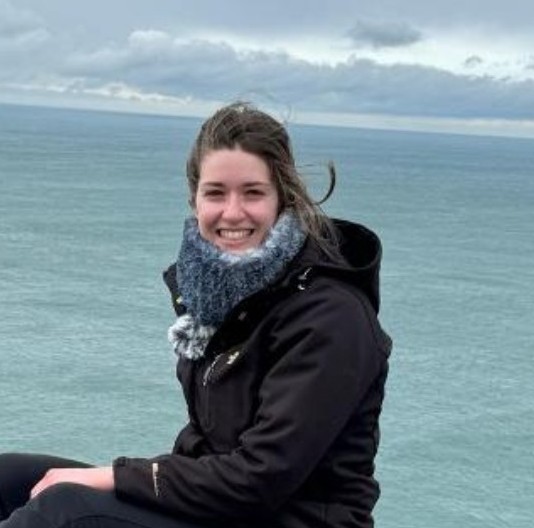
Arianna Destefani, founder of BlueHorizon Jobs, by the sea

Arianna Destefani

Founder, BlueHorizon Jobs — Educator, Düsseldorf

Connect on LinkedIn

Our promise

  • Free for job seekers, forever. No paid career advising, no premium tiers, no hidden walls.
  • No paid services. No featured listings, no pay-to-boost, no premium tiers — for employers or job seekers.
  • Honest data. Salary benchmarks are labeled illustrative until connected to a live source.
  • Student-first. Every feature is built around one question: does this help someone land their first Blue Economy role?

Say hello

Questions, ideas, or a resource every student should know about? Connect with the founder on LinkedIn — she reads every message.

Connect on LinkedIn
Turquoise ocean waves from above

Who is Who

The organizations behind European aquaculture

The most qualified and sophisticated aquaculture companies and research institutes, country by country — plus the wider actors of the blue economy. Filter by country to see who hires, who researches, and who to connect with.

Ocean wave under a blue sky

Where to Apply

Where the live roles are posted

We don't host job postings — we point you to the boards, networks, and employers that carry live Blue Economy openings across Europe and beyond. Each application goes straight to the hiring organization.

Where to Apply — Job Boards & Employers

We don't host job postings — we point you to the boards, networks, and employers that carry live Blue Economy openings across Europe and beyond. Each application goes straight to the hiring organization.

Europe-first boards & networks

Global boards

European institutes & employers hiring directly